

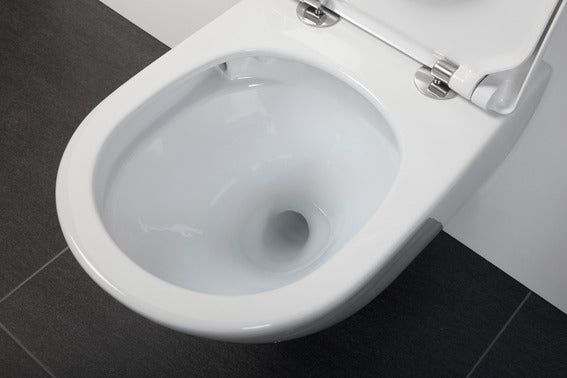
A rimless toilet removes the traditional enclosed channel around the upper inside edge of the bowl. Water is directed around the open bowl through a shaped outlet or flushing system, leaving fewer concealed areas to clean.
Why cleaning can be simpler
Without a closed rim, more of the bowl surface is visible and accessible to a cloth or brush. This can make routine cleaning quicker and reduce the hidden spaces where limescale and residue collect. It does not make a toilet self-cleaning or germ-free, so regular cleaning remains essential.
Flush design matters
Rimless is a broad description rather than one universal mechanism. The way water is directed varies between manufacturers and models. A well-designed bowl should distribute water effectively without excessive splashing, but performance also depends on the cistern, flush volume, installation and commissioning.
Choose the right installation type
- Close-coupled: the cistern sits directly behind the pan and remains accessible.
- Back-to-wall: the pan sits against furniture or a false wall, with the cistern concealed.
- Wall-hung: the pan is supported by a concealed frame, leaving the floor clear beneath it.
Back-to-wall and wall-hung arrangements can create a clean appearance, but access panels and compatible frames must be planned carefully for future maintenance.
Measure more than the width
Check the total projection into the room, pan height, seat shape, soil-pipe position and clearance around doors or furniture. A short-projection pan may help in a compact cloakroom, while a comfort-height option can suit some users. Where accessibility is important, consider the whole layout and seek appropriate professional advice rather than relying on product height alone.
Compare water use accurately
Many modern toilets use dual-flush cisterns, but rimless design by itself does not guarantee lower water consumption. Compare the stated full and reduced flush volumes for the complete pan-and-cistern combination and make sure the components are compatible.
Look at the seat and everyday details
A quick-release seat can simplify cleaning. Check whether the seat is included, whether replacements are readily available and whether soft-close hinges can be adjusted. The glaze, fixing method and access to concealed connections also affect long-term maintenance.
Before ordering
- Confirm compatibility with the existing or proposed soil connection.
- Check cistern, frame, flush plate and seat requirements.
- Allow access for isolation and servicing.
- Use a competent installer and test the flush before final sealing.
A rimless toilet can be an excellent practical choice, but the best model is the one that fits the room, works with the plumbing and can be maintained easily. Bathwise can help compare the complete specification rather than the pan in isolation.